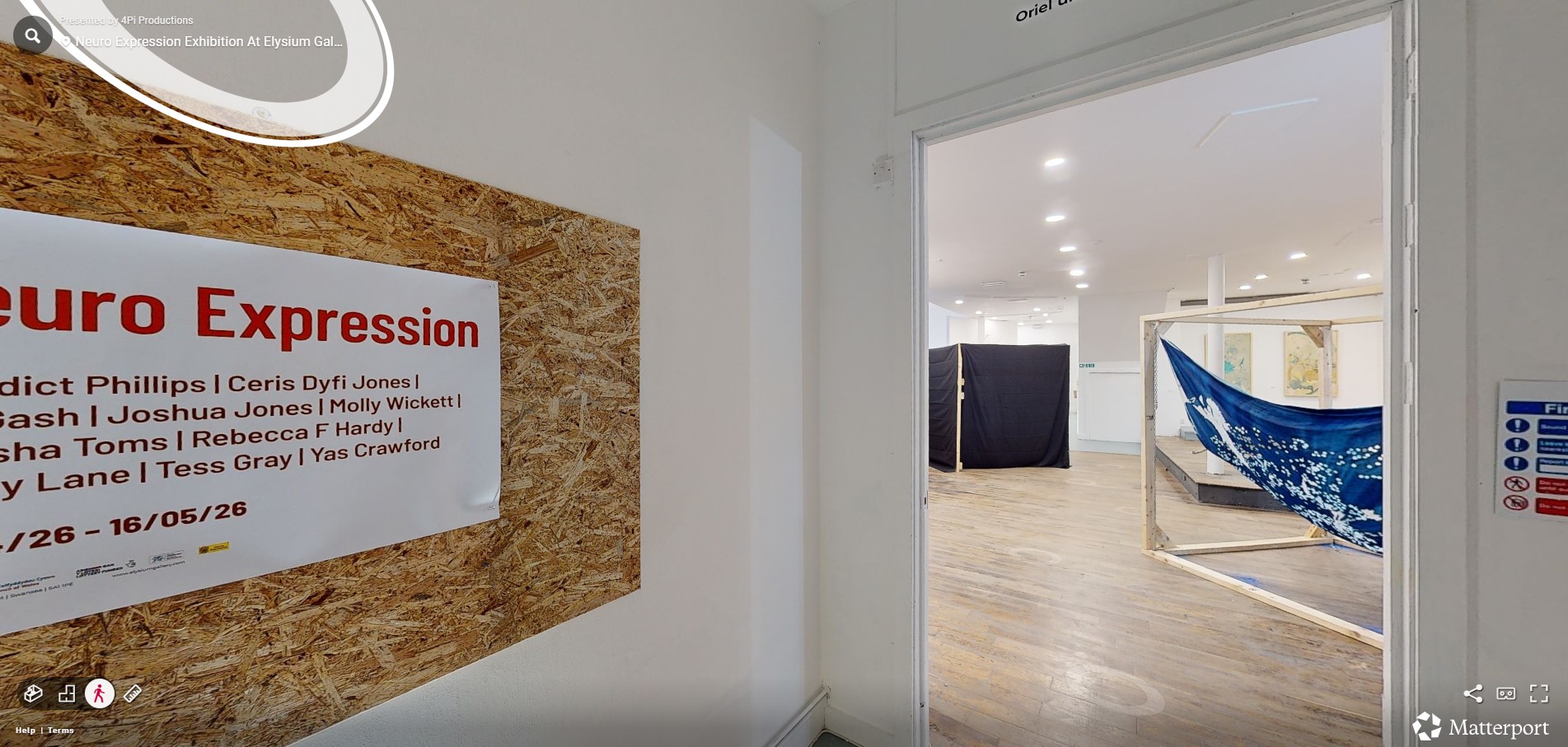
Scroll down to see a virtual tour of the exhibition!
Neuro Expression
10/04/26 – 16/05/25
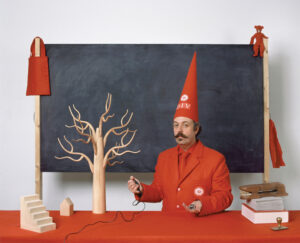
Benedict Phillips (image) | Ceris Dyfi Jones | Jen Gash | Joshua Jones | Molly Wickett |
Natasha Toms | Rebecca F Hardy | Mandy Lane |Tess Gray | Yas Crawford
Preview: Friday 10th April 7pm
Neuro Expression is a group exhibition of artists who identify as neurodivergent. Chosen from the result of a national open call-out, each artist explores and expresses their sensory, emotional, psychological or physical experiences as neurodivergent people.
This is an exhibition that showcases and celebrates the creativity, depth, and diversity of neurodivergent artists by bringing together works that challenge normative ways of seeing, thinking, and creating.
Benedict Phillips – https://www.instagram.com/benedictlphillips/
Benedict has been making explicitly neuro-affirmative art projects for 35 years and recently celebrated the 30th anniversary of his manifesto and artwork Agenda of the Agresiv Dislecksick, first published in Disability Arts in London magazine (DAIL), September1995. He also created the world’s first Lecksick (non-dyslexic) to dyslexic translation dictionary The Benedictionary in 2000 available as a hardback Limited edition since 2011.
Alongside his personal practice, Benedict is currently developing the Neurodiversity Arts, project; encompassing and reflecting on the past, present, and possible futures of neurodivergent creative practice. In 2025 after a two year search, he rescued from destruction the ‘Art Dyslexia Trust’ Archive (1992-2012), which represents well over 200 individuals, through newsletters, publications and artworks by dyslexic, Autistic and ADHD. The archive is at a very early stage of being reviewed.
Benedict has been a founding Director of several arts groups and organisations, including: Field Study (est. 1993, book art and mail group); Digital Media Labs (est. 2010, professional development residencies for artists); Lens Lab Project (est. 2020, a not-for-profit socially engaged photographic community-focused organisation). Benedict has been a regular guest lecturer at universities in the UK and the USA over the past 25 years, delivering professional development and artist talks. His work has been presented through and collected by organisations such as the Victorian & Albert Museum, Tate Galleries, Yorkshire sculpture Park and national collections in the US and Canada.
Benedict will be presenting work that explores his alternative neurodivergent universe as described through his alter ego The DIV; Who’s persona has manifested itself to date as a Teacher, Evangelist, Explorer, Architect and Anarchist.
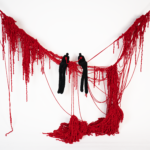
Within her artistic practice, Ceris Dyfi Jones uses the traditional art of crochet to explore her fascination with a range of contrasting themes. Connection vs Isolation is one; Playfulness vs Solemnity is another. Through Llinynnau’r Galon / Heartstrings, her ongoing textile series, these themes—alongside many others—come together via crocheted figures and their relationships to themselves and to each other.
As a neurodivergent woman with ADHD and Autism, she uses soft wool, which she finds immensely comforting to work with. This, alongside the pliability of the figures, transforms the process of creation into a form of sensory play, as she works intuitively to create each new Llinynnau’r Galon / Heartstrings composition according to her thoughts and feelings at the time. While she can control the positioning of the crocheted figures, the shaping of the heartstrings themselves is often unpredictable, forming a parallel with the sometimes erratic nature of the thoughts and feelings that accompany being human.
Created for the Neuro Expression exhibition, Yr Empath / The Empath and Trafodaethau gyda Mam / Conversations with Mam are new additions to the series. Presented alongside Troeon Hwyl / Mood Swings, the former evokes a state of emotional overflow whilst the latter reflects the comforting power of gathering such thoughts and feelings together and sharing them with someone who listens, understands, and helps to untangle them with you.
Ceris Dyfi Jones is an artist from Dolgellau in North Wales. Her experiments with textile Fine Art began while studying for an Art Foundation Diploma, in which she gained a Distinction in 2022. Prior to pursuing art, she graduated from Bangor University in 2020 with a First-Class degree in History with Film Studies.
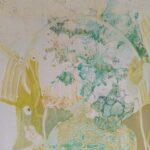
Jen Gash’s relationship with painting spans nearly 40 years—an often unplanned but persistent journey driven by a need to create and explore visually. Largely self-taught, aside from short courses and mentoring, she works alongside her practices as a therapist and occasional writer.
Her process embraces chance. Through a random, sometimes destructive and playful approach, she searches for emerging hints and suggestions within the paint. Imagery may surface quickly or take years to resolve, yet her work consistently carries tones of melancholy, pathos, or dreamlike reflection.
Recently, she has questioned her impulse to control and manipulate paint. Given its spontaneity and unpredictability—qualities that mirror the uncontrollable nature of the world—she asks why control feels necessary. In response, her recent works invite paint to act more freely through a modified marbling process. These pieces evoke the concept of Wu Wei: spontaneous harmony and effortless action, free from force or ego. Each immersion into the marbling water captures an unrepeatable moment. Sometimes minimal intervention is needed; at other times, the work is extensively reworked. In quiet focus, she detects emerging forms in a perceptual process akin to pareidolia.
Her work Crackerjack, created for Neuro Expression at Elysium Gallery, draws on personal metaphor. As a young woman, Gash recalls grasping eagerly at love and opportunity while early seeds of self-doubt took root. Over time these doubts—nicknamed “my cabbages”—grew persistent and demanding. Though the origin of the name is personal and given by others, it has endured as shorthand for self-doubt and imposter syndrome.
As adulthood brought new roles and responsibilities, competing pressures intensified. She describes a continual holding-in of feelings, ideas, intuition, and instinct—mirroring the need to “hold” the multiplying cabbages. In a world that often diminishes ageing women, loosening her grip can feel risky.
The image connects to the children’s television show Crackerjack, in which contestants clutched absurd armfuls of objects, cabbages included. That image became a catalyst for this body of work, which explores creativity and care, holding versus letting go, fear of holding the “wrong” things, embracing chaos, and managing enduring self-doubt. Influences include Phoebe Anna Traquair, Firelei Báez, and Emma Talbot.
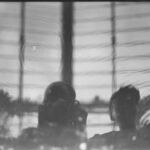
Joshua Jones (he/him) is a queer, disabled writer & artist from Llanelli, South Wales. Local Fires, (Parthian, 2023) was shortlisted for awards including the Dylan Thomas Prize. He has published various pamphlets of poetry, including Three Months in the Zebra Room (Hello America Stereo Cassette, 2024), and The City on Film (Bread and Roses, 2024). His latest, I AM A MAN AT WORK (g39, 2025) is an art book accompanied with a creative text by Anthony Shapland. He is a Contributing Editor of Folding Rock.
The installation in this exhibition ‘At Home with You’ is a celebration of love and friendship between two friends, Joshua Jones and fellow artist Rey Hope, and of queerness, disability and neurodivergence. They initially met at the beginning of 2020 in Bristol, starting a romantic relationship and weathering the COVID-19 lockdowns, to moving to Cardiff together, to separating and building a lasting friendship. Through domestic scenes, portraits and depictions of nature, ‘At Home with You’ memorialises queer love, disability, intimacy and friendship.
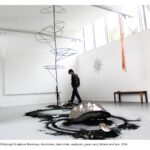
Molly Wickett is a visual artist working across sculpture and installation.
She creates sculptures that shift, twist, and embody her sensory experience of the world, making it physical through the twisting and carving of wood. Her works are tactile and bodily, shaped by her experience of disability, which offers a sensory lens shared with the viewer.
Themes of neurodivergence, ecology, time, and interdependence define the terrain of her practice. Wickett makes this work with the intention of building a future that fosters deeper connection—both with the environment and with neurodivergent people.
She seeks to share her sensory perspective with those who experience the world differently, and is particularly curious about how neurodivergent and disabled experiences can expand or subvert conventional understandings of time. She explores how materials might hold or express these ideas, creating spaces and landscapes of Otherness.
Drawn to concepts of submergence and futurity, Wickett investigates how sculpture can function as an entry point into a world that both excludes and invites. The sculptures presented in Neuro Expression feature carved wooden forms—abstract and amorphous—exhibited for the first time alongside an interactive installation.
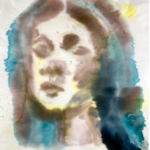
Natasha Toms is an early-career artist based in rural north Pembrokeshire. Working across painting, mixed media, and archival research, she responds to and unpicks historic representations of women in art, with a particular focus on stories that have been underrepresented or forgotten. Her work has been exhibited across England and Wales, including the Wrexham Painting Prize 2025 and Somewhere Between (2026), a solo exhibition at Urban Crofters in Cardiff. She has published articles on Art UK and is currently artist in residence at Scolton Manor, Haverfordwest.
As an artist with late-diagnosed combined ADHD, Toms reflects on how masking has shaped both her life and creative practice. She primarily works through tightly controlled, oil-based painting, often suppressing a more energetic and free-flowing impulse. Previously, she confined this freer aspect of her practice to sketchbooks, which she would later burn or destroy. She recognises in this process a parallel with the ways society attempts to suppress, manage, or erase the lesser-understood symptoms of ADHD.
For this project, she proposes a new body of work comprising a series of rapidly drawn women’s heads, centred on themes of masking, unmasking, and facial expression. Through this approach, Toms seeks to reconnect with herself—creating space for her impulsive side to surface and unfold in raw and uninhibited ways.
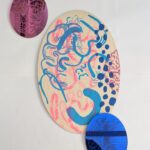
Rebecca F Hardy is a multi-disciplined visual artist based in North Wales. Her practice explores materials and the relationships between surface and object, colour, layers, and pattern. Working across drawing, screen-print, photography, video, live art, sculptural forms, and installation, she continually experiments with form and process.
Research into her neurodivergence underpins much of her work, alongside references to human anatomy, domestic objects, and her own shifting state of mind. Abstract forms often emerge from her personal study and understanding of her dyslexic brain. She frequently plays with the tension between excess and restraint—between what is visually harmonious and what tips into chaos—exploring the fine balance between too little and too much.
Her new collection for Neuro Expressionrevisits themes of contradiction, confusion, intensity, and concealment. Through the use of text, bold and garish colours, and the interplay between objects and forms, Hardy seeks to convey and reflect the ever-flowing thoughts of her mind, both figuratively and literally.
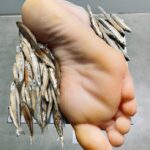
Mandy Lane (b.1980) is a British multidisciplinary artist working across figurative sculpture and installation. She recently graduated with an MA in Sculpture from the Royal College of Art. Lane’s practice explores the socio-cultural positioning of bodies and minds that are “othered”, with particular attention to disability, chronic illness, motherhood, and neurodivergence. Drawing on crip theory, neurodiversity discourse, and feminist critique, her work interrogates how dominant infrastructures privilege compulsory able-bodiedness, compulsory neurotypicality, and normative social roles.
Lane’s sculptural language engages the recognisable visual vocabulary of disability infrastructure — supports, access systems, and assistive technologies — to question the boundaries between body and environment. Her work is informed by lived experience, including her son’s diagnosis of Baló’s concentric sclerosis and her own neurodivergence, which catalysed an expanded engagement with care, visibility, regulation, and systemic exclusion. Through installation and figurative form, she positions disability not as deficit but as a site of knowledge, adaptation, interdependence, and resistance.
For this exhibition, Lane presents a series of figurative sculptures that blur distinctions between the neurodivergent body and disability infrastructure. Drawing inspiration from the ethos of accessible adaptive sporting equipment — structures designed to enable dignity, safety, and independence — these works translate physical accessibility into a neurodivergent context where support systems are often invisible, internalised, or relational. Carers, routines, sensory tools, masking strategies, emotional regulation, and assistive technologies are materialised as sculptural extensions of the body.
By fusing body and support structure, Lane renders visible the labour and resilience underpinning neurodivergent life while challenging deficit-based narratives. The works foreground care and access as fundamental human conditions and invite reflection on where the body ends and where assistance, adaptation, and relational support begin. Through this approach, Lane reclaims disability and neurodivergence as central — rather than peripheral — to conversations about embodiment, identity, and creative possibility.
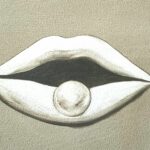
Tess Gray is a Welsh artist based in Cardiff.
Her work traverses the strange landscape that exists between psyche and the tangible world and creates portals to view archetypal mental wanderings, emotional narratives and corporeal sensations. Her process uses combinations of automatic drawing, memory, imagination and observational sketches to create still and moving images.
She studied Ba (Hons) Fine Art Painting at Winchester School of Art.Recent awards and shows include, Occupata: Intersum, Oriel Canfas (2025) Experimentica: Call to Spring Array of Opposites Chapter (2024), You Look Fine Though Elysium Gallery (2022), Wales in Venice DAC commissioned artist (2022), Beep Painting Peoples Prize winner (2020).
“I have a studio based practice and my work comes from many different places, outside, inside, microscopic and gigantic. Starting points can be an experience, a set of existing structures, a place, an emotion, an object. I use observational studies, imagined forms and automatic gestures. For me there is a connection to a continuous landscape that stretches out from these starting points into a psychic realm, weaving in and out of collective or autobiographical experience.
My work for Neuro Expression will look at experiences surrounding time blindness and the idea of ‘chrononormativity’ which is a term coined by Elizabeth Freeman in her book Time Binds: Queer Temporalities, Queer Histories. The work will stem out from personal and some collective neurodiverse experiences to shed a little light on how this unconventional understanding of time affects our sense of self, place in the world and social relationships.
Exercises in exquisite memory and failed forgetting mingle with thoughts of gender identity and archetypal symbols of the human path through life. The chaotic and magical stimulation of the present, pristine document of the past and an obscured concept of the future create a world where feelings of trepidation are faced and resolved by the calming void of deeptime.”
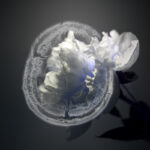
Yas Crawford is a visual artist, fine art photographer, and multidisciplinary collaborator from Pembrokeshire, Wales. Her work, influenced subliminally by the local landscape and biological forms, explores the intersections between art and science. She holds a degree in Geology and a master’s in photography, and has worked across business, non-profits, life sciences, and academia. Crawford describes her practice as existing in The Grey Space—a space between disciplines that embraces ambiguity, uncertainty, and creative dialogue.
An Honorary Fellow of the Royal Photographic Society and a Fellow supporting the Royal Society of Arts, Manufacturers and Commerce, Crawford has exhibited internationally. Awards include the Art of Neuroscience Award (2021, Netherlands Institute of Neurosciences). Significant exhibitions include The 8th Sense (Civitanova Alta, Italy), Cognition IX (Art of Neuroscience, Amsterdam, permanent display at the Netherlands Institute of Neurosciences), Cellular Flow (solo, Turin), Frozen Planet (London), Earth’s Canvas (Geological Society, London), and International Contemporary Art, Rome. She was also a finalist for the RPS Science Photographer of the Year (2019, London).
Crawford’s work employs digital, analogue, microscopic, scanning, and medical imagery alongside video, illustration, and camera-less techniques to challenge conventional understandings of environment, time, and human experience. For Neuro Expression, her contributions draw from two portfolios: The 8th Sense, linking bodily sensation to emotional response, and Edge of Sentience, exploring the bifurcated world of an anxious mind and the interplay of parallel realities.
Grounded in the entanglement of biological, medical, and environmental forces, Crawford’s work offers a phenomenological inquiry into how cognition, emotion, and bodily sensation are shaped by continual encounters with the world. Her pieces navigate oppositional and conflicting states, while also highlighting the ambiguous, complex, and aesthetically compelling aspects of human experience. Through this approach, she investigates the spaces “in between,” where questions are as significant as answers and where art can illuminate unseen connections across disciplines.
Click on the image below to begin your virtual tour of the exhibition